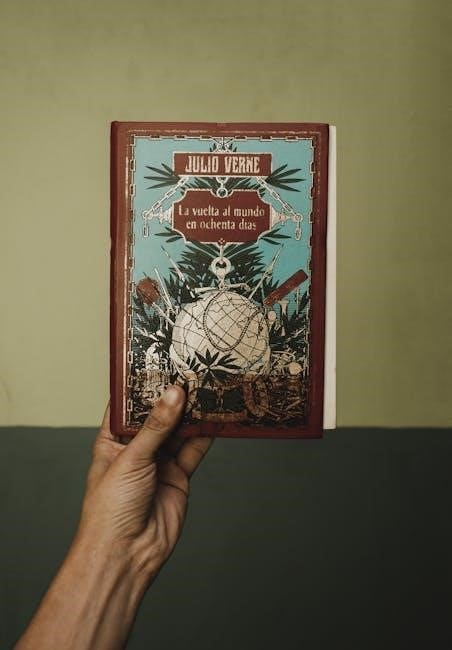
Spanish short stories, particularly those around in length and available as PDFs, are gaining traction as a powerful language learning tool, praised by educators like Barbara Oakley.
These curated collections offer engaging narratives, blending education with enjoyment, and are mapped to language proficiency levels like A2-B1, fostering skill enhancement.
The format provides accessible cultural insights and everyday life scenarios, making learning immersive and effective for beginner to intermediate Spanish students.
The Growing Popularity of Learning Spanish Through Stories
Spanish language acquisition is increasingly embracing story-based learning, with short stories, especially PDFs around , leading the charge. This method resonates with learners seeking an engaging alternative to traditional grammar drills.
The appeal lies in contextualized vocabulary and grammar, mirroring natural language use. Educators, including Barbara Oakley, advocate for this approach, highlighting its effectiveness in comprehension and retention.
The accessibility of PDFs further fuels this trend, allowing learners to study anytime, anywhere, fostering consistent practice and a deeper connection with the Spanish language and culture.
Why is an Ideal Length
A 1000-word length strikes a sweet spot for Spanish learners. It’s substantial enough to provide meaningful context and develop comprehension skills, yet concise enough to avoid overwhelming beginners.
This length allows for focused study of vocabulary and grammar within a complete narrative, promoting retention.
PDF format enhances accessibility, and represents a manageable reading commitment, encouraging consistent practice and building confidence in language proficiency.

Finding Spanish Short Stories in PDF Format
Numerous websites offer free Spanish PDFs, while paid resources provide higher-quality, curated collections of short stories for learners of all levels.
Popular Websites Offering Free Spanish PDFs
Several online platforms provide access to free Spanish short stories in PDF format. These resources often include a diverse range of genres and themes, catering to various interests.
While the quality can vary, these websites are excellent starting points for learners seeking accessible reading material. Many offer stories specifically designed for beginner and intermediate levels.
Exploring these options allows learners to build a library of stories without financial investment, supporting consistent practice and language immersion.
Paid Resources for High-Quality Spanish Story PDFs
For learners prioritizing curated content and pedagogical support, several paid resources offer high-quality Spanish short story PDFs. These often include features like vocabulary lists, grammar explanations, and comprehension questions.
Resources praised by educators, such as those aligning with the Common European Framework of Reference (A2-B1), provide structured learning paths.
Investing in these materials can accelerate progress, offering a more comprehensive and effective learning experience compared to solely relying on free options.
Benefits of Using Short Stories for Spanish Learning
Spanish short stories enhance comprehension, expand vocabulary in context, and improve grammar understanding, offering an immersive and enjoyable learning experience for all levels.
Improved Comprehension Skills
Spanish short stories, especially PDFs around , significantly boost reading comprehension. Engaging narratives provide context, making it easier to grasp meaning than isolated vocabulary lists or grammar rules.
The focused length prevents overwhelm, allowing learners to concentrate on understanding the storyline and nuances of the language, fostering a deeper connection with the text.
Consistent reading builds confidence and the ability to infer meaning, crucial skills for fluency.
Vocabulary Acquisition in Context
Spanish short stories, particularly 1000-word PDFs, excel at vocabulary acquisition. Unlike rote memorization, encountering words within a narrative provides immediate context, aiding retention and understanding of usage.
Learners naturally deduce meaning through the storyline, strengthening recall and making new words more accessible. This immersive approach fosters a richer, more practical vocabulary base.
Repeated exposure solidifies learning.
Enhanced Grammar Understanding
Utilizing Spanish short stories, especially 1000-word PDFs, significantly enhances grammar comprehension. Observing grammatical structures in situ—within a natural narrative—is far more effective than isolated drills.
Learners subconsciously internalize correct sentence construction and verb conjugations, improving fluency and accuracy. The context clarifies grammatical rules, making them easier to grasp and apply.
This intuitive learning fosters lasting understanding.

Levels of Spanish Short Stories (A1-B1)
Spanish short stories in PDF format cater to various levels, from A1 beginners to B1 intermediate learners, offering appropriately challenging and engaging content.
A1 Level: Stories for Beginners
A1 level Spanish short stories, often found as PDFs, prioritize simplicity and clarity for new learners. These narratives utilize basic vocabulary and grammar structures, focusing on everyday scenarios.
Expect stories centered around greetings, introductions, family, and simple actions, designed to build foundational comprehension. The goal is to provide accessible and encouraging reading practice, fostering confidence in beginner Spanish students.
These stories are crucial for establishing a base before progressing to more complex texts.
A2 Level: Building a Foundation
A2 level Spanish short stories, often available as PDFs, expand upon the basics, introducing slightly more complex grammar and vocabulary. These narratives begin to incorporate past and future tenses, alongside descriptive language.
Stories at this level often depict simple routines, hobbies, and interactions, building a stronger foundation in the language. They aim to solidify comprehension and encourage active vocabulary recall.
These stories bridge the gap towards intermediate fluency.
B1 Level: Intermediate Fluency
B1 level Spanish short stories, frequently found as PDFs, challenge learners with more intricate plots, nuanced characters, and a wider range of grammatical structures, including the subjunctive mood.
These narratives explore diverse themes – cultural insights, everyday dilemmas, and fictional scenarios – demanding greater comprehension and analytical skills.
They foster independent reading and prepare students for more advanced Spanish literature.
Key Features to Look for in Spanish Short Story PDFs
Ideal Spanish PDFs include vocabulary lists, grammar explanations, and comprehension questions to reinforce learning and ensure a deeper understanding of the narrative.
Presence of Vocabulary Lists
Spanish learning PDFs are significantly enhanced by integrated vocabulary lists; these lists clarify unfamiliar words within the story context, boosting comprehension and retention;
Effective lists often include definitions, example sentences, and even phonetic pronunciations, aiding learners in expanding their lexicon efficiently.
This feature transforms reading from a potentially frustrating experience into a focused and productive language acquisition opportunity.
Grammar Explanations
High-quality Spanish short story PDFs often include concise grammar explanations tied directly to the structures used within the narrative, solidifying understanding.
These explanations avoid overwhelming learners with complex rules, instead focusing on practical application within the story’s context, improving retention.
This targeted approach makes grammar learning less abstract and more intuitive, accelerating fluency development for Spanish students.
Comprehension Questions
Effective Spanish short story PDF resources frequently incorporate comprehension questions following each story, testing understanding and reinforcing key details.
These questions range from simple recall to more analytical prompts, encouraging active reading and critical thinking in the target language.
This self-assessment feature allows learners to gauge their progress and identify areas needing further review, maximizing learning efficiency.
Utilizing Comprehensible Input (CI) in Story Selection
Selecting Spanish short stories as PDFs requires prioritizing “comprehensible input,” ensuring the text is understandable without constant dictionary use, like wading through tall grass.
The “Savannah vs. Rainforest” Analogy
Imagine learning Spanish with stories as exploring terrain. A book offering comprehensible input (CI) feels like the African Savannah – manageable progress with some challenge. Conversely, a difficult text, requiring constant stops, resembles a dense Brazilian rainforest.
In the rainforest, you’re battling complexity, hindering flow; in the Savannah, you move with relative ease. Choosing PDF stories aligned with your level ensures a Savannah-like experience, maximizing learning and enjoyment.
Choosing Stories Appropriate for Your Level
Selecting Spanish short story PDFs aligned with your proficiency is crucial. Beginners (A1) should start with simpler narratives, while those at A2-B1 can tackle more complex plots and vocabulary.
Prioritize “comprehensible input” – content you understand with minimal dictionary use. A 1000-word story should feel challenging yet accessible, fostering engagement and accelerating language acquisition.

Spanish Story Themes and Genres
Spanish short stories in PDF format encompass diverse themes: everyday life, cultural explorations, and captivating fiction, offering learners varied and engaging content.
Everyday Life Scenarios
Spanish short stories frequently depict relatable, everyday life scenarios, providing learners with practical vocabulary and phrases used in common situations.
These narratives often center around interactions at cafes, markets, or family gatherings, offering authentic language exposure.
Such stories, often found in PDF collections, help bridge the gap between textbook learning and real-world communication, enhancing comprehension and fluency.
Cultural and Geographical Stories
Many Spanish short story PDFs delve into the rich cultures and diverse geographies of Spanish-speaking countries.
These narratives explore traditions, customs, and landscapes, offering learners a broader understanding beyond language acquisition.
Stories might highlight regional festivals, historical events, or unique geographical features, enriching the learning experience with cultural context and authentic details.
Fiction and Fantasy
Within the realm of Spanish short story PDFs, fiction and fantasy genres provide captivating narratives for language learners.
These stories often feature imaginative plots, compelling characters, and fantastical settings, enhancing engagement and motivation.
They offer a fun and creative way to expand vocabulary and grammatical understanding, while immersing readers in the beauty of the Spanish language.

Resources for Spanish Learners: Barbara Oakley & Dual Language Programs
Spanish learning benefits from educators like Barbara Oakley, who champions story-based methods, and dual language programs utilizing engaging PDF short stories.
The Role of Educators in Story-Based Learning
Educators play a crucial role in integrating Spanish short stories, like those in PDF format, into curricula. They can guide students through comprehension, vocabulary acquisition, and grammatical concepts presented within the narratives.
Facilitating discussions and providing tailored support ensures learners maximize the benefits of comprehensible input. Adapting stories, especially for younger students, enhances engagement and fosters a love for language learning, mirroring successful dual language program strategies.
Adapting Stories for Young Learners
When utilizing Spanish short stories in PDF format for children, educators should prioritize age-appropriate themes and vocabulary. Simplifying complex sentences and focusing on relatable scenarios enhances comprehension.
Supplementing stories with visuals, interactive activities, and pronunciation support caters to diverse learning styles. This approach, mirroring successful dual language programs, cultivates a positive learning experience and builds foundational language skills.
Downloading and Utilizing PDF Features
PDFs offer convenient features like highlighting, annotation, and text-to-speech functionality, maximizing learning from Spanish short stories. These tools enhance comprehension and retention.
Highlighting and Annotation Tools
Spanish learners benefit immensely from utilizing highlighting tools within PDF readers to mark unfamiliar vocabulary or key grammatical structures encountered in short stories.
Annotation features allow for direct note-taking, translating challenging phrases, or summarizing paragraphs, fostering active engagement with the text.
These interactive methods transform passive reading into a dynamic learning experience, solidifying understanding and improving retention of new language elements.
Text-to-Speech Functionality
Many PDF readers offer text-to-speech capabilities, a valuable asset for Spanish learners using short stories. Hearing native pronunciation alongside reading reinforces auditory comprehension and improves pronunciation skills.
This feature aids in identifying subtle nuances in spoken Spanish, enhancing listening abilities and building confidence in oral communication.
It’s particularly helpful for tackling complex sentence structures or unfamiliar vocabulary within the stories.

Beyond Reading: Expanding Your Learning
Enhance learning with audio accompaniments for pronunciation practice and engage in discussion or writing prompts inspired by the Spanish short stories’ themes.
Audio Accompaniments for Pronunciation
Spanish short stories truly come alive when paired with audio recordings! Listening alongside reading reinforces correct pronunciation and intonation, crucial for fluency. These audio resources, often available alongside PDF versions, allow learners to mimic native speakers.
This immersive experience bridges the gap between written text and spoken language, improving comprehension and building confidence in speaking abilities. It’s a powerful supplement to traditional study methods.
Discussion and Writing Prompts
Enhance your learning with Spanish short stories by actively engaging beyond reading! Discussion prompts encourage critical thinking and verbal practice, solidifying comprehension of the narrative and vocabulary within the PDF.
Writing prompts, inspired by the stories, foster creative expression and grammar application. These exercises transform passive reading into active language production, accelerating fluency and retention.

The Future of Spanish Story-Based Learning
Spanish learning will see continued growth in online resources, yet traditional PDF short stories remain valuable for focused, immersive practice and accessibility.
Emerging Trends in Online Resources
Spanish language platforms are increasingly integrating interactive elements into short story formats, moving beyond static PDFs. Expect more gamified learning experiences, personalized story recommendations based on proficiency, and AI-powered vocabulary support within digital readers.
These innovations aim to enhance engagement and cater to diverse learning styles, while still leveraging the core benefits of comprehensible input found in well-crafted 1000-word narratives.
The Continued Value of Traditional PDFs
Despite emerging digital trends, traditional PDFs retain significant value for Spanish learners. Their offline accessibility, portability, and annotation features – highlighting, note-taking – remain highly practical.
PDFs offer a focused, distraction-free reading experience, ideal for deep comprehension. They also provide a cost-effective resource, complementing interactive online tools and supporting sustained language practice.