
Yale YRD216 Deadbolt: A Comprehensive Guide
This guide details installing and programming the Yale Assure Lock, ensuring proper function and avoiding warranty issues․ Follow these instructions carefully for a secure setup!
The Yale YRD216 is a keypad deadbolt offering keyless entry and smart home integration capabilities․ This model, part of the Yale Assure Lock series, provides enhanced security and convenience for your home․ It replaces your existing deadbolt with a modern, technologically advanced locking system․
This manual guides you through the entire process, from removing your old hardware to connecting the lock to the August app or other smart home platforms․ Proper installation and programming are crucial; failure to follow instructions may damage the product and void the factory warranty․ The YRD216 offers a blend of traditional security with the benefits of smart access control․
What’s Included in the Box
Upon opening your Yale YRD216 package, you should find several key components․ These include the exterior and interior portions of the deadbolt assembly itself, along with the touchscreen keypad for both sides of the door․ A mounting plate is provided to ensure secure attachment to your door frame․
You’ll also receive all necessary screws and mounting hardware for installation․ Importantly, the package contains the instruction manual – this document! – to guide you through each step․ Verify all listed items are present before beginning installation to avoid delays․ The YRD216 is designed for standard door preparations, but checking compatibility is always recommended․
Safety Precautions & Warranty Information
Prior to installation, carefully review all safety precautions outlined in this manual․ Failure to adhere to these instructions could result in product damage, voiding the factory warranty, and potentially compromising security․ Always disconnect power to any connected smart home systems before working with the lock․
The Yale Assure Lock YRD216 is covered by a limited warranty against defects in materials and workmanship․ This warranty does not cover damage resulting from improper installation, misuse, or unauthorized modifications․ Retain your proof of purchase for warranty claims․ Refer to the full warranty document (available online) for complete details and duration of coverage․
Installation Process
Begin by removing existing hardware, verifying door dimensions, and then installing the deadbolt assembly and keypads for a seamless integration․
Removing Existing Door Hardware
Before installing your Yale Assure Lock, carefully remove all existing door hardware, including the previous deadbolt, strike plate, and any associated screws․ Ensure you have a Phillips head screwdriver readily available for this process․ Inspect the door edge and frame for any damage or inconsistencies that might hinder the new lock’s installation․
Pay close attention to the strike plate; note its position and how it aligns with the deadbolt․ This information will be crucial when installing the new strike plate included with the Yale YRD216․ Retain all screws for potential reuse if compatible, but be prepared to utilize the new hardware provided․ A clean and prepared door surface is essential for a secure and functional installation․
Verifying Door Measurements
Accurate door measurements are critical for successful Yale Assure Lock installation․ The manual emphasizes double-checking these dimensions to prevent issues․ Specifically, verify the backset – the distance from the door edge to the center of the bore hole – is either 2 3/8 inches or 2 3/4 inches․
Also, confirm the door thickness falls within the supported range, typically between 1 3/8 and 2 1/4 inches․ The diameter of the bore hole should be 2 1/8 inches․ Incorrect measurements can lead to improper lock function or even damage․ Refer to the included dimensional diagrams in the manual for clarity and ensure your door meets these specifications before proceeding with installation․
Installing the Deadbolt Assembly
Begin by inserting the exterior assembly into the door bore hole, ensuring the tailpiece aligns correctly․ Next, attach the interior assembly, carefully aligning it with the exterior portion․ Secure both assemblies using the provided mounting screws, tightening them firmly but avoiding over-tightening, which could damage the lock․
The manual stresses ensuring a snug fit between the assemblies for optimal security and functionality․ Test the deadbolt’s operation by manually extending and retracting it․ Verify smooth movement without binding․ Proper installation of the deadbolt assembly is foundational for the entire lock system’s performance and security․
Installing the Interior and Exterior Keypads
After the deadbolt assembly is secure, attach the exterior keypad, aligning it with the designated mounting points․ Connect the ribbon cable from the exterior keypad to the interior assembly, ensuring a firm and secure connection․ Then, install the interior keypad, again aligning it properly and connecting its ribbon cable․
The manual emphasizes careful handling of the ribbon cables to prevent damage․ Ensure the keypads sit flush against the door surface․ Gently test the keypad buttons to confirm they are functioning correctly before proceeding․ Proper keypad installation is crucial for reliable code entry and lock operation․
Connecting the Cable
Once the interior and exterior assemblies are mounted, connect the cable linking them․ This ribbon cable is delicate, so handle it with care to avoid damage – damage voids the warranty! Carefully insert the ribbon cable connector into the designated port on the interior assembly․ Ensure it’s fully seated and locked into place․
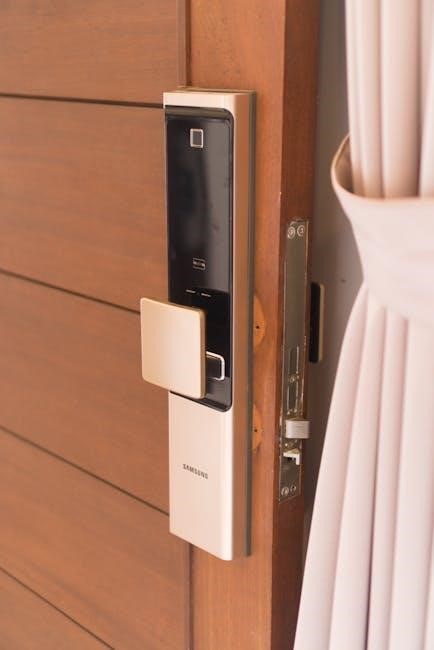
The manual stresses the importance of a secure connection for proper lock functionality․ Gently tug on the cable to confirm it’s firmly attached․ Avoid excessive force․ A loose connection can lead to unresponsive keypads or communication errors between the lock’s components․ This step is vital for seamless operation․

Programming the Lock
Begin by establishing a Masterpin code for secure access and full control over user management and lock settings, as detailed in the manual․
Initial Setup & Masterpin Code
Upon initial power-up, the Yale Assure Lock requires a Masterpin code to be established․ This crucial step secures administrative access and prevents unauthorized programming changes․ The manual emphasizes selecting a unique and memorable code, avoiding easily guessable numbers like birthdays or addresses․
During setup, the lock will guide you through the process, prompting for the desired Masterpin․ This code is essential for adding or deleting user codes, adjusting lock settings, and integrating the lock with smart home systems․ Remember to store this code securely, as it’s vital for future lock management․ Failure to properly set the Masterpin can compromise the security of your home․
Adding User Codes
The Yale Assure Lock allows for multiple user codes, granting access to family members, guests, or service providers․ Utilizing the Masterpin, you can easily add new codes through the keypad interface․ The manual instructs to choose unique, four to eight-digit codes for each user, enhancing security․
During the addition process, the lock confirms successful code creation․ It’s recommended to document each user’s code and associated access permissions for effective management․ You can assign temporary or permanent access as needed․ Regularly review and update user codes, especially after personnel changes, to maintain optimal security․ The lock’s capacity for user codes provides flexible access control․
Deleting User Codes
Removing user access is crucial for security, and the Yale Assure Lock simplifies this process․ Using your Masterpin, navigate the lock’s menu to the user code deletion function․ The manual details a straightforward procedure to individually remove codes, ensuring only authorized individuals retain access․
Confirm each deletion to prevent accidental removal․ Regularly review the list of active user codes and promptly delete those belonging to former residents, employees, or anyone no longer requiring access․ Maintaining an updated user list minimizes potential security breaches․ The lock’s interface provides a clear and efficient method for managing user permissions and enhancing overall security․
Programming Schedule Codes
The Yale YRD216 allows for enhanced security through scheduled access codes, granting entry only during specific times and days․ Utilizing your Masterpin, access the scheduling function within the lock’s menu․ You can then assign unique codes to users, defining their active periods – ideal for cleaners, dog walkers, or temporary guests․
This feature minimizes risk by restricting access outside designated times․ The manual provides clear instructions on setting start and end dates, as well as recurring day patterns․ Regularly review and update schedules to reflect changing needs․ Schedule codes offer a convenient and secure alternative to permanent user codes, bolstering your home’s protection․
Auto-Lock Feature Configuration
The Yale YRD216 boasts an auto-lock feature, enhancing security by automatically locking the door after a pre-set period․ Accessed through the lock’s programming menu using your Masterpin, you can customize the auto-lock duration, typically ranging from 30 seconds to several minutes․ This eliminates the worry of accidentally leaving your door unlocked, providing peace of mind․
Consider your lifestyle when setting the duration; shorter times offer greater security, while longer times provide convenience․ The manual details how to enable or disable this feature entirely․ Regularly verify the auto-lock setting to ensure it aligns with your preferences and security needs․ It’s a simple yet effective way to bolster your home’s defense․

Smart Home Integration
Seamlessly connect your Yale Assure Lock to your existing smart home ecosystem via the August App or Yale Access for remote control and monitoring․
Connecting to the August App
To integrate your Yale YRD216 with the August App, ensure Bluetooth is enabled on your smartphone․ Download and install the August app from your app store, then create an account or log in․ Follow the in-app instructions to add a new lock; the app will guide you through the pairing process․
The app will search for nearby Yale Assure Locks․ Once detected, select your lock and follow the prompts to complete the connection․ You may be asked to enter your Masterpin code during setup․ After successful connection, you can remotely lock/unlock, grant access to guests, and view activity history directly within the August app, enhancing your home security and convenience․
Yale Access App Setup
The Yale Access app provides expanded control and features for your YRD216 lock․ Download the app and create a Yale Access account․ Add your lock by following the in-app instructions, which involve scanning the QR code located on the lock’s interior assembly or entering the lock’s serial number manually․
Yale Access allows for more advanced settings, including customized access schedules, unique entry codes for family and guests, and integration with other Yale smart home devices․ You’ll also receive real-time notifications about lock activity․ This app offers a robust platform for managing your home’s security beyond the basic functionalities of the August app․
Z-Wave Integration
The Yale YRD216 supports Z-Wave Plus technology, enabling seamless integration with compatible smart home hubs․ To connect, put your Z-Wave hub into inclusion mode, then initiate Z-Wave inclusion on the lock by pressing the program button three times rapidly․ The lock will enter discovery mode, allowing the hub to find it․
Once connected, you can control the lock remotely through your Z-Wave hub’s interface and create automated scenes․ Z-Wave offers reliable, low-power communication, ideal for security devices․ Ensure your Z-Wave hub is compatible with the YRD216 before attempting integration for optimal performance and functionality․
Bluetooth Connectivity
The Yale YRD216 utilizes Bluetooth for direct communication with the Yale Access Mobile App, offering convenient control and monitoring․ Bluetooth allows for initial setup, programming, and remote operation when within range of your smartphone or tablet․ Pairing is simple – ensure Bluetooth is enabled on your device and follow the in-app instructions․
This direct connection bypasses the need for a hub in many cases, providing a streamlined user experience․ However, range is limited by Bluetooth’s inherent characteristics․ For extended control and smart home integration, consider utilizing Z-Wave or connecting through the August Connect Wi-Fi bridge․

Troubleshooting
Resolve common issues like unresponsive locks, incorrect code errors, or connectivity problems with the August/Yale Access app using this section․
Lock Not Responding
If your Yale Assure Lock isn’t responding, begin by verifying sufficient battery power; low batteries are a frequent cause․ Ensure the lock is properly aligned and the deadbolt isn’t obstructed․ Attempt a manual reset by removing and reinserting the batteries․
Confirm the keypad isn’t experiencing moisture interference․ If the issue persists, check for any error signals indicated by the keypad lights – consult the manual for specific error code meanings․ A factory reset, while erasing all codes, can sometimes resolve deeper software glitches․
Finally, ensure the cable connecting the interior and exterior components is securely fastened․ If none of these steps work, contact Yale support for further assistance․
Incorrect Code Errors
Repeatedly entering an incorrect code will temporarily disable the keypad as a security measure․ Wait a few minutes before attempting another entry; the lock will automatically re-enable after a short delay․ Double-check the entered code for accuracy, paying attention to capitalization if applicable (though typically not)․
If you’ve forgotten your Masterpin, a factory reset might be necessary, but this will erase all programmed codes․ Review your records to confirm the correct codes were initially entered during setup․ Ensure no debris or obstructions are interfering with the keypad buttons․
Consider if a user code has been accidentally deleted or modified․ Refer to the programming section of the manual for code management instructions․
Connectivity Issues with August/Yale Access
If the Yale Assure Lock isn’t connecting to the August or Yale Access app, first ensure Bluetooth is enabled on your smartphone or tablet․ Verify the lock is within range of your mobile device․ Restart both the lock (by briefly removing and reinserting batteries) and the August/Yale Access app․
Check your Wi-Fi network connection if using a Wi-Fi bridge․ Confirm the bridge is properly connected and online․ Sometimes, a simple app update resolves connectivity glitches․ If problems persist, try removing and re-adding the lock within the app, following the in-app instructions carefully․
Ensure your mobile device’s operating system is up-to-date․
Low Battery Warnings & Replacement
The Yale Assure Lock will provide a low battery warning through the August/Yale Access app and a flashing red light on the keypad․ Don’t ignore these warnings! Immediately replace all four AA batteries with fresh ones․ Using high-quality alkaline batteries is recommended for optimal performance and longevity;
Even if the lock still functions after the low battery warning, replace the batteries promptly to avoid potential lockouts․ A complete battery depletion can cause temporary operational issues․ After replacement, re-sync the lock with the August/Yale Access app to ensure accurate battery level reporting․
Battery life varies based on usage․
Advanced Features
Unlock enhanced convenience with voice assistant compatibility and automatic firmware updates, keeping your Yale Assure Lock secure and functioning optimally․
Voice Assistant Compatibility (Alexa, Google Assistant)
The Yale YRD216 seamlessly integrates with popular voice assistants like Amazon Alexa and Google Assistant, offering hands-free control of your lock․ Through the Yale Access app, you can link your lock and enable voice commands for locking, unlocking, and checking lock status․ Imagine simply saying, “Alexa, lock my front door,” or “Hey Google, is my door locked?” for added convenience and security․
This feature requires a compatible smart home hub and a stable internet connection․ Detailed instructions for linking your Yale Assure Lock to each voice assistant platform are available within the Yale Access app and on the Yale website․ Enjoy the benefits of a truly connected home with voice-activated access control!
Firmware Updates
Maintaining up-to-date firmware on your Yale YRD216 is crucial for optimal performance, security enhancements, and compatibility with new features․ Yale regularly releases firmware updates via the Yale Access app to address potential vulnerabilities and improve overall functionality․ The app will automatically notify you when an update is available․

During the update process, ensure the lock has sufficient battery power and remains undisturbed․ Do not interrupt the update, as this could potentially damage the lock’s internal software․ Firmware updates are a simple yet vital step in safeguarding your home security and maximizing the benefits of your Yale Assure Lock system․

Maintenance & Care
Regular cleaning, lubrication, and proper battery management will ensure the longevity and reliable operation of your Yale YRD216 deadbolt lock․
Cleaning the Keypad
To maintain the responsiveness and appearance of your Yale YRD216 keypad, regular cleaning is recommended․ Use a soft, damp cloth to gently wipe the keypad surface․ Avoid abrasive cleaners, solvents, or harsh chemicals, as these can damage the finish and potentially affect functionality․
Ensure the lock is dry before operating․ Do not spray any liquid directly onto the keypad; instead, apply it to the cloth first․ A slightly dampened cloth is sufficient to remove dust, fingerprints, and smudges․ For stubborn marks, a mild soap solution can be used, followed by a clean, damp wipe to remove any residue․ Consistent cleaning will help preserve the keypad’s sensitivity and extend the life of your Yale Assure Lock․
Lubrication
While the Yale YRD216 is designed for reliable performance with minimal maintenance, occasional lubrication can ensure continued smooth operation of the deadbolt mechanism․ It’s recommended to use a silicone-based lubricant specifically designed for locks; avoid oil-based lubricants as they can attract dust and grime, leading to future issues․
Apply a small amount of lubricant to the deadbolt latch and the interior/exterior cylinder․ Work the deadbolt several times to distribute the lubricant evenly․ Do not over-lubricate, as excess lubricant can also collect debris․ Regular, light lubrication – perhaps annually – will help prevent sticking and maintain the lock’s functionality, contributing to its longevity and security․
Battery Type and Lifespan
The Yale YRD216 deadbolt requires four AA alkaline batteries for operation․ It’s crucial to use high-quality alkaline batteries to maximize lifespan and ensure reliable performance․ Avoid using rechargeable, lithium, or heavy-duty batteries, as they may not function correctly or could damage the lock․
Battery life varies depending on usage frequency, environmental factors, and features enabled․ Typically, a set of batteries will last between 12 to 24 months under normal use․ The lock provides low battery warnings well in advance of complete depletion, allowing ample time for replacement․ Prompt battery changes are essential to prevent lock failure and maintain security․